

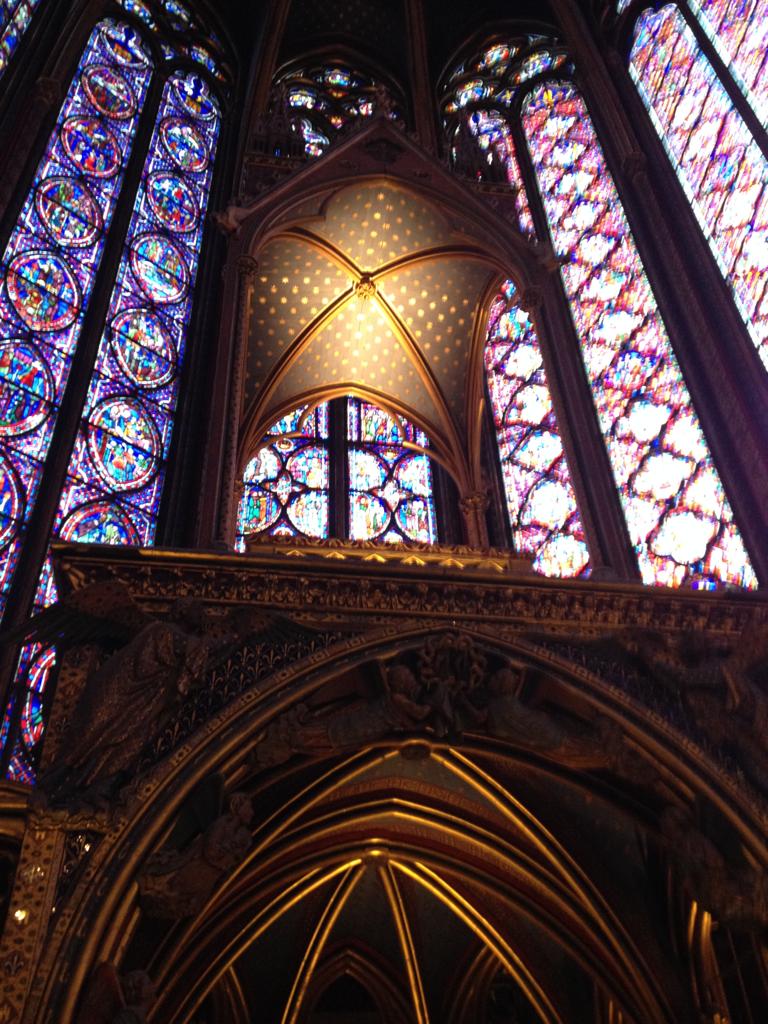
I went to church this morning. I attend mass sporadically and inconsistently. I am more likely to go to church when I’m somewhere other than home, but when I am home and go, I go to the 9am mass. Always the 9am. It seems right. A later mass would feel lazy to me.
When I talk to people about going to mass, I often express my observations about the decline of religion in general and worship in particular. I describe the empty pews and small number of congregants and their median age being much closer to average life expectancy than not.
Most times, the listeners of my description of the decline of religion just nod and agree, hoping I’ll shut up soon. It’s not an interesting subject, and most people don’t really care or are even glad religiosity is declining. There was one person, however, who claimed my observations were downright wrong, and he had an explanation. It was my choice of mass time, he said. The 9am mass is sparse and old, but the 10:30 is filled to the brim, young and lively!
Well, even though his simple solution seemed like the light at the end of my dark tunnel on the current state of religion, I refused to find out if it was true. It didn’t make sense to me and I liked my 9am slot. I was used to it.
Last night, I shut my alarm off on my phone, so I didn’t wake up as early as I usually do on a Sunday. There was no way I would make the 9am. Normally this would usually just result in my skipping church altogether, not wanting to be proven wrong about church times, but today I decided to stop being such a nudge and just go to the 10:30am mass.
I got there about 10 minutes early as I always do. For those 10 minutes, I take my glasses off, cover my face with my hands, kneeling, and open my heart up. I do this until just before the mass starts. As I got up and sat down today, I noticed how empty the church was. Emptier than the 9am. I would be lying if I didn’t feel a creepy satisfaction that I was right for about a split second. That I had won a meaningless argument. The fact was it was not filled to the brim. It was a noticeably smaller number of congregants than at my earlier mass.
The mass had not started and it was already past the starting time. So the mass started late and as it proceeded, a good number of late-comers sauntered into the church. Ah, I thought, so this is the mass for the tardies. But I felt vindicated as the mass proceeded and more and more people arrived 5, 10, even 15 minutes late. The trickle of tardies filled some empty seats, but in the end it was difficult to say if there were more or less people than at my 9am mass.
I decided to scan the congregants and take an informal, unprofessional and potentially biased census. Those 75 years old or older and who were mostly attending alone amounted to approximately 60% of the total congregants. Next were the middle agers, like me, those 45-75 years old. At least half of us were attending alone, and we accounted for approximately 25%. Then there were what I called the family ages, 25-45 year-olds, usually couples and often with little children. They consisted of approximately 14%. I say 14% because there was one last group that had a very minute representation that can’t be forgotten. Those 18-25 years old, or a little older, who were alone. Perhaps unmarried, uncoupled or just alone. They made up the last 1%.
So to this point my amateur investigation of the two masses resulted in a few conclusions. Both masses are sparsely attended and the composition of those who attend leans heavily to the much older, and with time this will mean the congregant sizes will get smaller and smaller as the older ones pass on to better places.
The scripture reading concerned one of the difficult dilemmas that often come up in the Bible relating to unconditional love. The story of the prodigal son is the most known, but this one was the story of the vineyard owner who hired laborers throughout the day, up until the end of the workday, only to pay everyone the same. This left those who started in the morning angry and dismayed. The idea is to teach that unconditional love does not reward one more than another. Does not judge someone who struggles as inferior to someone who lives a good moral life. Unconditional love treats all God’s children the same, as visibly or invisibly we all struggle with the challenges, temptations and mistakes that make up life.
The one big advantage the 10:30am has over the 9am is the choir. At the 9am, there is a sole singer, whereas the 10:30am has a full choir along with the organ. The sole singer’s voice is beautiful, but the choir can transform the air into another realm. I’ve probably mentioned this a thousand times in my writings, but I am an emotional guy. When I’m pleasantly surprised, it’s even more dramatic. When I sat in church today I had forgotten about the 10:30am choir, and when they started to sing from the loft behind me, it was as though angels had just appeared beside me.
Maybe it’s just me, but religious choral music has always felt magical. Beautiful incantations that conjure up peace, hope and strength from the darkness deep inside you. The music made my cold amateur census seem like a silly endeavor. Magically erasing concerns for the future of religion in particular and human beings in general. It felt like hope and love floating through the air like smoke from incense. And it made me cry.
A sudden and fierce hurricane of memories, regrets, worries, longings and God-knows-what-else erupted in my mind for a very short burst, but then was banished, again like magic, by the music and angelic voices. I love that feeling. I have felt it many times before. I guess for me it is as close to God as I realize I have ever been, His hand calming my storms.
At the end of mass there is usually a last song that plays as the congregants make their way out, but this morning was the last day the music conductor would be at the parish. He was moving to work in a parish in his native Philadelphia. Because of this, he and his choir devised a grander ending. It was a Hallelujah, a composition by a composer I didn’t recognize, that did not have as many words as better known versions of Hallelujah. Just “Hallelujah” repeated over and over in a mesmerizing chant. The congregants who hadn’t left stood, standing backwards looking up to the choir loft as the singers’ voices along with the organ mesmerized the people below. My eyes teared up again, my chest tightened, hope and love filling me again.
At the end, everyone clapped as though they had just seen a stunning performance at Carnegie Hall. A spontaneous unplanned standing ovation. The director and his choir were visibly surprised and moved. The world is a beautiful and horrific place, occasional atrocities share existence with occasional joys. We seem to have made today’s world especially challenging to live through.
I struggle to hang on to my religion. The media seldomly have anything good to say about it, and more likely than not they try to expose its horrific dark underbelly. The markedly lower number of mass attendees does not encourage me. The endless sandstorm of modern life’s distractions, responsibilities and expectations demand our attention. All these contribute to my struggle, and I feel it is getting harder to overcome it and easier to just abandon worship entirely.
But in a sparsely attended little church in suburban Long Island, a few congregants and a small choir shared an uplifting experience, a moment of hope, a sharing of love and a tiny injection of courage to go on, face life, do good and love. My faith is rekindled for a little while longer. Hallelujah.
 Renato Passalacqua